Extraterrestrial life
Hypothetical life originating from worlds beyond Earth.

Quimby, Freeman Henry, 1915- · Public domain
Extraterrestrial life, also called alien life, refers to life that originates from a world other than Earth. No such life has yet been detected, but speculation about its existence dates back to antiquity, and the scientific field of astrobiology studies the possibility. The concept has profoundly influenced culture and fiction, and debates continue over whether to actively attempt contact with intelligent extraterrestrial beings.
- field
- Astrobiology
- known_for
- Hypothetical life beyond Earth; subject of the Drake equation and searches via telescopes and radio signals
- key_concept
- No confirmed detection; speculation based on the size and age of the universe, ubiquity of life's raw materials, and universal physical laws
Lore & Background
Speculation about inhabited worlds beyond Earth dates back to antiquity. Early Christian writers, including Augustine, discussed ideas from Democritus and Epicurus about countless worlds. In the 15th century, William Vorilong acknowledged the possibility that Jesus could have visited extraterrestrial worlds to redeem their inhabitants. Descartes wrote that there were no means to prove the stars were not inhabited by 'intelligent creatures,' but their existence remained a matter of speculation.
Reader's Guide
Since the mid-20th century, researchers have searched for extraterrestrial life and intelligence. Methods range from analysis of telescope and specimen data to radios used for interstellar communication. Interstellar travel remains largely hypothetical, with only Voyager 1 and Voyager 2 confirmed to have entered the interstellar medium. A key debate centers on contacting extraterrestrial intelligence: some advocate active attempts, while others warn it could be risky, given human history of exploiting other societies. The likelihood of extraterrestrial life is argued using the Copernican principle, the size and age of the universe, the ubiquity of carbon and water, and universal physical laws.
Did You Know?
- No extraterrestrial life has yet been detected.
- The Drake equation speculates about the existence of sapient life elsewhere in the universe.
Ancient and Medieval Speculation About Inhabited Worlds
The idea that other worlds might harbor life stretches back to the earliest recorded philosophical traditions. Thinkers in antiquity, including Democritus and Epicurus, proposed that the universe contained countless worlds, and early Christian writers like Augustine engaged with these ideas, debating whether such worlds could exist. By the fifteenth century, the notion had grown rich enough for William Vorilong to speculate that Christ might have journeyed to other worlds to offer redemption to their inhabitants. Around 1440, Nicholas of Cusa reframed Earth itself as a brilliant star and argued that every celestial body, even the Sun, could potentially sustain living beings. René Descartes later acknowledged that no logical proof could rule out the presence of intelligent creatures among the stars, while simultaneously insisting that any such claim remained firmly in the realm of speculation. These early reflections established a philosophical tradition in which the mere possibility of life beyond Earth was treated as a legitimate subject of intellectual inquiry long before any instrument could confirm or deny it.
Stellar Forges and the Cosmic Recipe for Life
The raw materials necessary for life are not unique to our solar system; they are scattered throughout the cosmos as a direct product of stellar evolution. In the first roughly fifteen million years after the Big Bang, the universe was far too hot for any organic chemistry to occur, and the heavier elements that compose living tissue did not yet exist. Stars spend the bulk of their lives fusing hydrogen into helium, releasing energy in the process. In their final stages, they begin fusing helium into carbon, and the most massive stars push further, building oxygen, silicon, neon, and sulfur before reaching iron. When these stars die, they eject much of that material back into interstellar space, where it joins clouds of gas and dust that will eventually collapse into new stars and planets. The first organic compounds may have assembled on the tiny dust grains within protoplanetary disks, the same kind of disks that gave birth to rocky worlds like Earth. Because this cycle of stellar birth, fusion, and death repeats across the entire universe, the chemical ingredients of life are cosmically ubiquitous rather than a rare accident confined to one planetary system.
The Search, the Distances, and the Limits of Technology
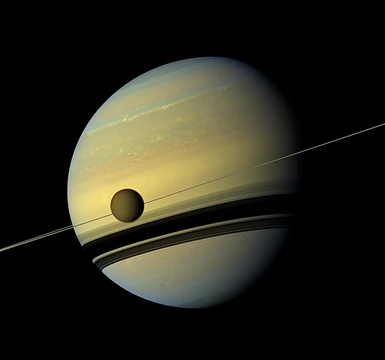
Since the mid-twentieth century, scientists have pursued extraterrestrial life through a variety of methods, from analyzing telescope data and collected specimens to operating radio arrays designed to detect or broadcast interstellar signals. Within the solar system, attention has concentrated on Venus, Mars, Jupiter's moon Europa, and Saturn's moon Titan, while the exoplanet tally now stands at 6,022 confirmed worlds orbiting 4,490 stellar systems as of October 2025. Yet the sheer scale of interstellar space imposes severe practical constraints. The New Horizons spacecraft required nine years after launch to reach Pluto, and no probe has ever crossed into another planetary system. Voyager 2, traveling at roughly 50,000 kilometres per hour, would need around 100,000 years to arrive at Alpha Centauri, the nearest stellar system at 4.4 light-years. Under present technology, distant worlds can only be studied through telescopes, which carry inherent observational limitations. Only Voyager 1 and Voyager 2 have been confirmed to have entered the interstellar medium, leaving the vast majority of the universe accessible solely through indirect measurement.
Habitability, Extremes, and the Lessons of Earth
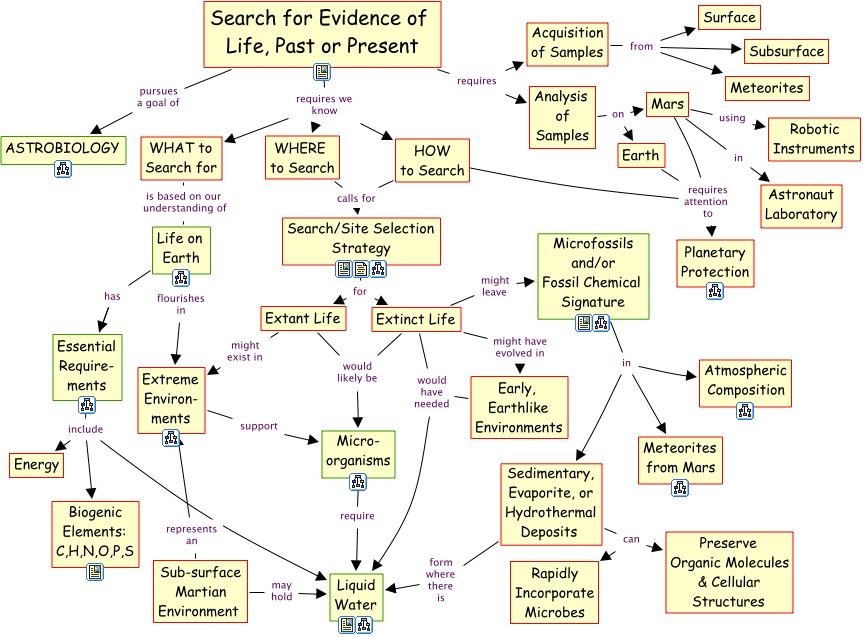
Most planets and moons both inside and outside our solar system present surface conditions and atmospheric chemistries that would seem hostile to life as we know it. Yet Earth itself hosts ecosystems in environments that would appear equally forbidding: microbial communities thrive around hydrothermal vents on the ocean floor, in acidic hot springs, in volcanic lakes, among halophiles in extreme salt concentrations, and within the deep biosphere beneath the crust. These harsh niches are frequently cited as possible analogues for where life on Earth originally arose. The concept of a circumstellar habitable zone, often called the Goldilocks zone, identifies the orbital distance at which liquid water could persist on a planetary surface, but this single criterion is far from sufficient. Venus sits within the Sun's habitable zone yet lacks liquid water because of its atmospheric conditions, while Europa, well beyond that zone, likely harbours a subsurface ocean kept liquid by tidal heating. Gas giants, even those orbiting close to their stars as hot Jupiters, are ruled out by crushing atmospheric pressures. True habitability depends on a constellation of factors beyond mere distance from a star.
Gallery

Frequently Asked Questions
What is extraterrestrial life?
It is the broad term for any living organism that would originate on a planet, moon, or other body outside Earth. The idea has been speculated about since antiquity, yet no actual specimen has ever been identified.
Has extraterrestrial life ever been confirmed?
No confirmed detection exists to date. Scientists search for biosignatures using telescopes, radio-signal surveys, and chemical analysis, but nothing definitive has been found so far.
Which scientific field is dedicated to studying life beyond Earth?
Astrobiology is the discipline that examines whether life could exist elsewhere and how we might detect it. It weaves together chemistry, geology, and physics to evaluate the conditions necessary for biology.
What role does the Drake equation play in this topic?
It offers a multiplicative framework for estimating how many intelligent civilizations might exist by factoring in star-formation rates, planet occurrence, and the probability of life arising. Because most of its variables remain uncertain, it functions more as a structured speculation tool than a precise prediction.
Why is the concept of extraterrestrial life significant in astronomy?
It drives some of the field's deepest questions about humanity's place in the cosmos and motivates decades of telescope and radio-array research. The vast size and age of the universe, combined with the widespread availability of life's raw materials and universal physical laws, make the question difficult to dismiss.
More in Astronomy 1-24
Spotted an error? Know more?
This is a living reference — every entry is fact-audited, and reader corrections feed straight into our audit queue. Suggest an edit · See this site's audit record