Event horizon
A spacetime boundary beyond which no signal can reach an observer.

Sergei Listopad · CC BY-SA 4.0
An event horizon is a boundary in spacetime beyond which no signal can ever reach a given observer. The term was coined by Wolfgang Rindler in the 1950s. Event horizons are most commonly associated with black holes, but also appear in cosmology as cosmic event horizons and in accelerated reference frames.
- field
- Astrophysics, General Relativity
- known_for
- Boundary beyond which events cannot affect an outside observer
- related_concepts
- Black holes, apparent horizons, cosmic event horizons
Lore & Background
Stephen Hawking suggested using an apparent horizon instead, stating that gravitational collapse produces apparent horizons but no event horizons, and later concluded that the absence of event horizons means there are no black holes in the sense of regimes from which light can't escape to infinity. In an expanding universe, a cosmic event horizon exists when the speed of expansion reaches or exceeds the speed of light, preventing signals from traveling to some regions. The criterion for a cosmic event horizon involves the comoving distance integral; if it diverges, no horizon exists. Universes dominated by matter or radiation have no event horizon, while a universe dominated by a cosmological constant (de Sitter universe) does. For an accelerating particle, an apparent horizon appears at a distance of c²/a, where a is the constant proper acceleration. This is not a true event horizon because it requires indefinite acceleration. In black holes, the Schwarzschild radius acts as an event horizon for non-rotating bodies, proportional to mass. For the Sun, this radius is about 3 kilometers; for Earth, about 9 millimeters.
Reader's Guide
Event horizons are fundamental to understanding black holes and cosmology. They represent the ultimate boundary of observability and causality. The concept has evolved from Newtonian escape velocity ideas to relativistic definitions, with ongoing debates about whether true event horizons exist or whether apparent horizons are more physically relevant. Stephen Hawking's suggestion that gravitational collapse produces only apparent horizons challenges the traditional black hole concept. In cosmology, the cosmic event horizon determines the observable universe's limits, affecting our understanding of the universe's expansion and future. The distinction between event horizons and apparent horizons is crucial in current black hole research, with isolated and dynamical horizons being important areas of study. The information paradox and firewall paradoxes have prompted re-examination of local event horizons. Event horizons also appear in accelerated reference frames, though these are not true horizons. The concept remains central to theoretical physics, with implications for quantum gravity and the nature of spacetime.
Did You Know?
- Wolfgang Rindler coined the term 'event horizon' in the 1950s.
- Stephen Hawking suggested that gravitational collapse produces apparent horizons but no event horizons.
- The Schwarzschild radius for Earth is about 9 millimeters.
The Planet-Scale Virtual Telescope
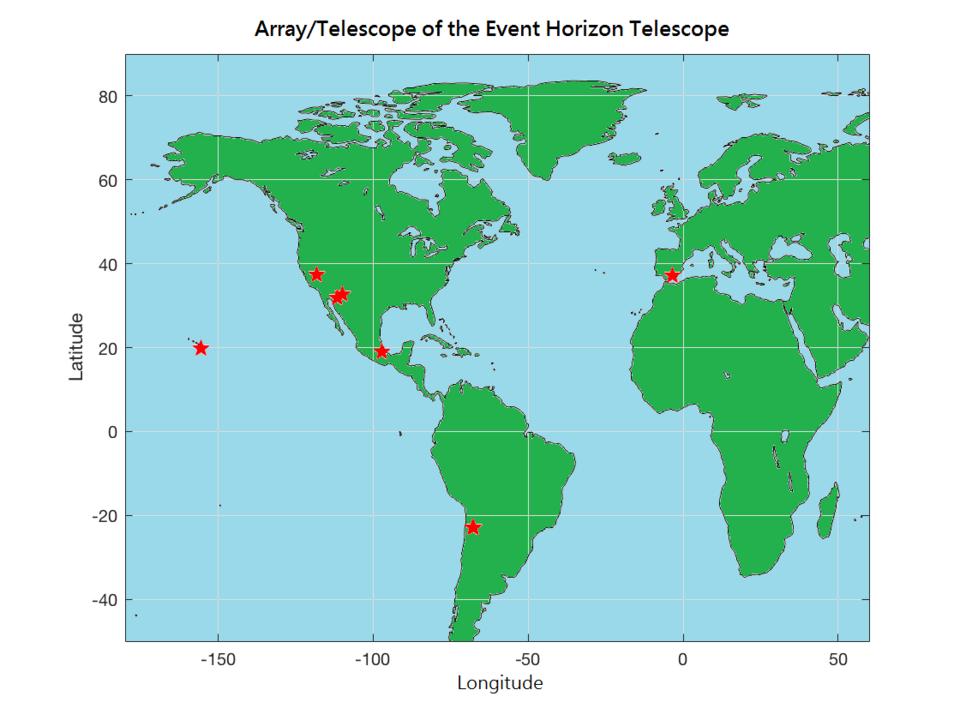
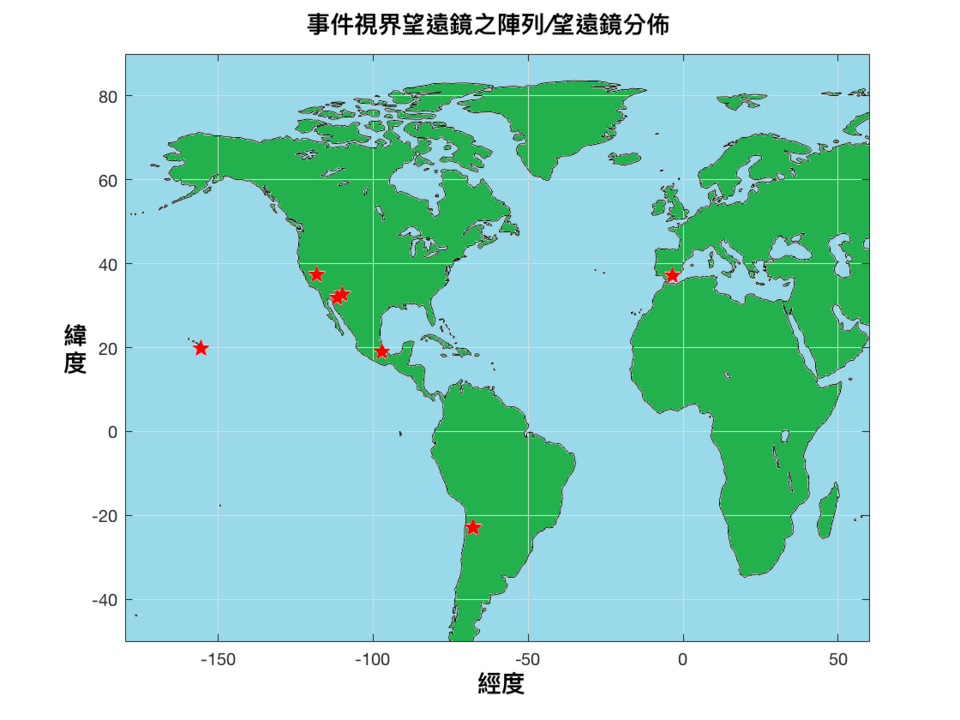
The Event Horizon Telescope is not a single instrument but a planet-scale virtual telescope assembled from radio observatories scattered across the globe. By applying very-long-baseline interferometry, antennas separated by hundreds or thousands of kilometres function as one phased array whose effective aperture spans the diameter of Earth. Each site is equipped with an extremely precise atomic clock; analogue signals are digitized and stored on hard drives alongside those time stamps. The physical media are then shipped—what the team calls a "sneakernet"—via commercial freight flights to two central processing hubs: MIT Haystack Observatory and the Max Planck Institute for Radio Astronomy. There, roughly 800 CPUs linked by a 40 Gbit/s network cross-correlate and analyze the combined data. The array has grown annually since its first data capture in 2006, adding new observatories each campaign. Technical development has included submillimeter dual-polarization receivers, highly stable frequency standards for 230–450 GHz observations, and higher-bandwidth backends.
Imaging M87*: The 2019 Breakthrough
On April 10, 2019, the EHT Collaboration held six simultaneous press conferences around the world to unveil the first-ever direct image of a black hole, located at the heart of the supergiant elliptical galaxy Messier 87. The observation was made at a wavelength of 1.3 mm, achieving a theoretical diffraction-limited resolution of 25 microarcseconds. The resulting image revealed a dark shadow-like region surrounded by a bright ring of emission, consistent with the gravitational bending and capture of light predicted by Einstein's general relativity. The published papers in The Astrophysical Journal Letters confirmed the shadow matched expectations for a spinning Kerr black hole. The image also yielded new measurements: the black hole's mass was determined to be 6.5 ± 0.7 billion solar masses, and its event horizon diameter was approximately 40 billion kilometres—roughly 2.5 times smaller than the shadow visible in the image. A clockwise rotation was detected in the 6σ region. This represented the closest observational test of general relativity yet, pushing measurements right to the event horizon itself.
Sagittarius A*, Polarized Light, and Pushing Resolution
The EHT's second major target, Sagittarius A*, the supermassive black hole anchoring the Milky Way's center, proved more challenging to image. Data captured in April 2017 could not be fully processed until December of that year because the South Pole Telescope's hard drives could not leave the continent during austral winter. The first image of Sgr A* was finally unveiled on May 12, 2022. Between those milestones, in March 2021, the Collaboration presented the first polarization-based image of the M87* black hole, a technique that may help reveal the magnetic forces powering quasars. The array's capability has continued to advance: since 2018 it has imaged at 870 μm (345 GHz), delivering an angular resolution of 19 microarcseconds—the best of any ground-based telescope. Future plans call for adding new telescopes and pushing to shorter wavelengths to sharpen resolution further. The 2020 campaign, delayed by the pandemic, weather, and celestial mechanics, was rescheduled to March 2021.
Building a Global Collaboration
Launched in 2009 after years of theoretical groundwork and technical development, the Event Horizon Telescope project has grown into one of the most geographically distributed scientific collaborations in astronomy. The theory side progressed from early work on photon orbits and first simulations of black hole appearance to detailed VLBI imaging predictions for the Galactic Center. On the technical front, the path moved from the initial detection of Sgr A* through increasingly short-wavelength VLBI to the eventual detection of horizon-scale structure in both Sgr A* and M87. Today the collaboration encompasses more than 300 members spread across 60 institutions in over 20 countries and regions. The project demands a wide range of expertise: developing and deploying submillimeter dual-polarization receivers, maintaining highly stable frequency standards, building higher-bandwidth VLBI backends and recorders, and commissioning new submillimeter observing sites. Each annual campaign adds more observatories to the global network, steadily expanding the virtual telescope's reach and sensitivity.
Gallery




Frequently Asked Questions
What is an event horizon?
An event horizon is a boundary in spacetime beyond which no signal, particle, or information can ever propagate back to a given outside observer. It represents an absolute causal limit: once something crosses it, its future is forever disconnected from the external universe.
Who coined the term 'event horizon' and when?
Physicist Wolfgang Rindler introduced the phrase in the 1950s to describe the causal boundary separating regions of spacetime that can or cannot influence one another.
How does an event horizon differ from an apparent horizon?
An apparent horizon is a locally defined, time-dependent surface that can shift as matter falls in, while an event horizon is a globally defined boundary whose location depends on the entire future evolution of the spacetime. In practice, the two can coincide in stationary black holes but diverge during dynamical events like mergers.
Do event horizons exist only around black holes?
No. The same causal-boundary concept appears in cosmology as a cosmic event horizon, which caps how far we will ever be able to observe because of the universe's accelerating expansion. Event horizons also arise in the reference frames of uniformly accelerated observers, even in flat spacetime.
Why is the event horizon central to black hole physics?
It is the feature that makes a black hole truly 'black,' since nothing that crosses it can ever send information back to the outside universe. This one-way causal structure underpins foundational ideas such as the no-hair theorem, black hole thermodynamics, and Hawking radiation.
More in Astronomy 1-24
Spotted an error? Know more?
This is a living reference — every entry is fact-audited, and reader corrections feed straight into our audit queue. Suggest an edit · See this site's audit record