Extinction (astronomy)
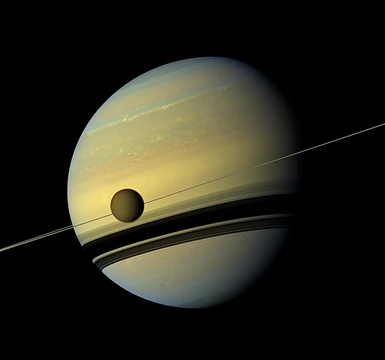
Extinction dims and reddens starlight via interstellar dust and gas.

Julia Hawkins · CC BY 2.0
Extinction in astronomy is the absorption and scattering of electromagnetic radiation by dust and gas between an emitting astronomical object and the observer.
- field
- Astronomy
- known_for
- Interstellar extinction and reddening
- typical_visual_extinction_rate
- 1.8 magnitudes per kiloparsec near the Milky Way plane
- typical_R(V)_value
- 3.1 for the Milky Way
Lore & Background
Interstellar extinction arises from dust and gas between an object and the observer, scattering and absorbing light. For stars near the Milky Way plane within a few thousand parsecs, visual extinction is roughly 1.8 magnitudes per kiloparsec. Extinction also occurs from Earth's atmosphere and circumstellar dust, with strong atmospheric extinction in X-ray, ultraviolet, and infrared wavelengths overcome by space-based observatories.
Reader's Guide
Interstellar reddening, a consequence of extinction, makes stars appear redder because blue light is more strongly attenuated than red. This is distinct from redshift, as spectral lines remain unchanged. Color excess, defined as the difference between observed and intrinsic color index, quantifies reddening; in the UBV photometric system, E(B−V) = (B−V)_observed − (B−V)_intrinsic. Extinction varies with direction; toward the Galactic Center, optical extinction can exceed 30 magnitudes, creating the zone of avoidance. The extinction curve from ultraviolet to near-infrared is characterized by R(V) = A(V)/E(B−V), typically 3.1 in the Milky Way but varying along different lines of sight. The relationship between neutral hydrogen column density and visual extinction is approximately N_H / A(V) ≈ 1.8 × 10^21 atoms cm^−2 mag^−1.
Did You Know?
- Extinction causes objects to appear redder than expected, a phenomenon called interstellar reddening.
- In the UBV photometric system, color excess E(B−V) equals observed B−V minus intrinsic B−V.
Tracing the Discovery of Interstellar Extinction
The recognition that invisible material between us and distant stars dims and distorts their light did not arrive all at once. As early as 1847, Friedrich Georg Wilhelm von Struve recorded observations consistent with the dimming effect, and over the following decades, several other astronomers noticed that stars shifted in color compared to expectations. None of these early observers, however, linked the phenomenon to a pervasive cloud of galactic dust. It was not until 1930 that Robert Julius Trumpler formally identified and documented interstellar extinction as a distinct physical process. For stars situated near the Milky Way's plane and within a few thousand parsecs of Earth, the dimming in the visual band works out to roughly 1.8 magnitudes per kiloparsec, a figure that gave later researchers a concrete benchmark. The gap between Struve's initial note and Trumpler's definitive paper spans nearly a century, illustrating how a subtle optical effect can hide in plain sight until the right theoretical framework is in place.
How Reddening Reshapes Starlight
When starlight traverses the interstellar medium, dust grains and gas do not absorb all wavelengths equally. Shorter, bluer photons are scattered and absorbed far more efficiently than their longer, redder counterparts, so the spectrum reaching a telescope is stripped of its blue component while the red end remains largely intact. Crucially, this process does not shift the positions of spectral lines the way cosmological redshift does; instead, it selectively removes photons from the short-wavelength side of the curve, leaving the line structure untouched. Astronomers quantify this effect through the concept of color excess, which is simply the gap between a star's observed color index and the intrinsic value it would carry in the absence of any intervening material. In the UBV photometric system introduced in the 1950s, an A0-type main-sequence star serves as the zero-point reference, and observers compare at least two and sometimes up to five calibrated passbands—U, B, V, I, or R—subtracting magnitudes from right to left to extract the extinction contribution.
Spectral Fingerprints and the Extinction Curve
Beyond the broad dimming of starlight, extinction imprints a distinctive shape on the observed spectrum that varies with wavelength. In the solar neighborhood, the average visual-band extinction in the Johnson–Cousins V filter at 540 nanometers is typically quoted as 0.7 to 1.0 magnitudes per kiloparsec, meaning a star loses roughly half its visual brightness for every 3,260 light-years of intervening dust. Superimposed on this general slope are sharp absorption features that reveal the chemistry of the dust itself: the prominent 2175-angstrom bump, the diffuse interstellar bands of uncertain origin, a 3.1-micron water-ice signature, and silicate absorption at 10 and 18 microns. The overall ultraviolet-to-near-infrared extinction curve, spanning 0.125 to 3.5 microns, is often summarized by a single parameter, R(V), though known deviations exist along different lines of sight. Extending the law into the mid-infrared proves difficult because suitable calibration targets are scarce and additional absorption contributions muddy the picture.
When Extinction Becomes Extreme
In most directions across the Milky Way, extinction is a manageable correction, but toward the Galactic Center the situation becomes extreme. Dense dust from our own spiral arm, combined with the bulge's own concentrated matter, can produce more than 30 magnitudes of optical extinction, so few as one photon in ten trillion manages to reach an Earth-bound telescope. This creates what astronomers call the zone of avoidance, a band along the galactic plane where the extra-galactic sky is effectively hidden and background galaxies like Dwingeloo 1 went undetected until radio and infrared observations finally pierced the veil. Terrestrial observers face a second layer of attenuation from Earth's atmosphere, which blocks X-rays, much of the ultraviolet, and large swaths of the infrared; space-based observatories were developed specifically to bypass those wavelength windows. Circumstellar dust surrounding individual objects can add yet another local component, and the clumpiness of interstellar material means that even the modest average rate conceals large local variations.
Gallery





Frequently Asked Questions
What is Extinction (astronomy)?
Extinction is the dimming and reddening of light from stars and other celestial sources as it travels through interstellar dust and gas between the emitter and the observer. The effect arises from both absorption of photons by solid particles and scattering of light out of the direct line of sight.
Why does Extinction (astronomy) make stars look redder?
Shorter blue wavelengths scatter and get absorbed more efficiently by interstellar dust grains than longer red wavelengths, so the surviving light is skewed toward the red end of the spectrum. Astronomers therefore pair the terms 'extinction and reddening' to describe the combined loss of brightness and shift in apparent color.
What is the typical Extinction (astronomy) rate in the Milky Way?
Near the galactic plane, visual extinction averages about 1.8 magnitudes for every kiloparsec of path length through the interstellar medium. The standard total-to-selective extinction ratio, R(V), is generally taken as 3.1 for Milky Way dust, a value used in most color-correction calculations.
Why is Extinction (astronomy) important for researchers?
Failing to correct for extinction would cause astronomers to systematically underestimate the true luminosity and intrinsic color of distant objects, throwing off distance estimates and stellar classifications. Properly accounting for it is therefore a prerequisite for mapping the interstellar medium and comparing objects across the galaxy.
More in Astronomy 1-24
Spotted an error? Know more?
This is a living reference — every entry is fact-audited, and reader corrections feed straight into our audit queue. Suggest an edit · See this site's audit record